
critical vulnerabilities verified
Critical vulnerabilities represent some of the most serious security risks that an organization can face. These weaknesses may allow attackers to access sensitive information, compromise systems, disrupt operations, or gain unauthorized control over applications. Because of their potential impact, identifying and confirming critical vulnerabilities requires a careful and structured verification process. Security professionals do not simply rely on automated alerts; they analyze, validate, and confirm vulnerabilities to determine whether they are genuine threats and understand their possible consequences.
The verification process usually begins after security scanning or initial testing identifies a potential weakness. Automated security tools are useful for detecting a wide range of issues, but they can sometimes produce false positives or misinterpret application behavior. Security experts manually review the findings to determine whether the reported vulnerability exists and whether it can actually be exploited. This step ensures that organizations focus their resources on genuine security concerns rather than spending time addressing inaccurate reports.
A major part of vulnerability verification involves reproducing the identified issue in a controlled environment. Security testers attempt to perform the same actions that could be used by an attacker while following approved testing procedures. By successfully demonstrating the vulnerability, they confirm its existence and gather information about its severity. This practical validation helps organizations understand the real-world impact of the security weakness and determine the urgency of remediation.
The level of access required to exploit a vulnerability is also examined during verification. Some critical vulnerabilities may be exploited remotely without authentication, while others may require a valid user account or specific permissions. Security professionals analyze these conditions to determine the likelihood of exploitation. Understanding the attack requirements helps organizations prioritize vulnerabilities based on actual risk rather than only relying on severity ratings.
Application behavior is carefully analyzed during the verification process. Security testers examine how the vulnerability affects different components, such as authentication systems, databases, user inputs, APIs, and access controls. For example, a weakness in input handling may allow unauthorized data access, while a flawed authentication mechanism may enable account takeover. A detailed analysis helps create an accurate picture of the vulnerability and its potential impact on business operations.
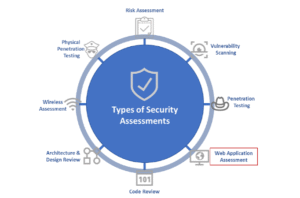
How are critical vulnerabilities verified?
A web application vulnerability assessment & penetration test often includes multiple verification techniques to confirm critical findings. Security professionals combine automated scans, manual testing methods, code analysis, and application behavior reviews to ensure accurate results. This combination reduces errors and provides deeper insights into vulnerabilities that may not be detected through automated tools alone. Manual verification is especially important for complex application logic flaws where automated systems may not fully understand business processes.
Proof-of-concept testing is another method used to validate critical vulnerabilities. A controlled demonstration may be created to show how an attacker could take advantage of the weakness without causing damage. The purpose of proof-of-concept testing is not to harm systems but to provide clear evidence that the vulnerability is exploitable. This evidence helps security teams and business leaders understand why immediate action may be required.
Security professionals also evaluate the potential consequences of a confirmed vulnerability. They consider factors such as data exposure, system compromise, financial impact, regulatory risks, and effects on customers. A vulnerability affecting sensitive customer records or critical business functions may receive higher priority than an issue with limited impact. Risk assessment allows organizations to develop effective remediation strategies based on business importance.
Verification also involves checking whether security controls are functioning properly. Testers may analyze whether existing protections such as authentication mechanisms, access restrictions, encryption, or monitoring systems reduce the risk associated with a vulnerability. In some cases, a weakness may exist but be partially controlled by additional security measures. Understanding these protections provides a more accurate assessment of the overall risk level.
After verification is completed, detailed documentation is created to communicate the findings. Reports typically include information about the vulnerability, affected components, verification methods, risk rating, possible impact, and recommended remediation steps. Clear documentation allows technical teams to reproduce the issue, apply fixes, and confirm that vulnerabilities have been successfully resolved.
Organizations benefit from verifying critical vulnerabilities because it prevents unnecessary disruptions and ensures that security efforts are focused on real threats. Proper validation reduces confusion, improves decision-making, and helps security teams address the weaknesses that present the greatest danger. Without verification, organizations may overlook serious issues or waste resources on problems that do not create meaningful risks.
As cyber threats continue to evolve, accurate vulnerability verification has become an essential part of maintaining secure applications. By combining automated detection with expert analysis, controlled testing, and detailed risk evaluation, organizations can better understand their security weaknesses. A structured approach to verifying critical vulnerabilities enables businesses to strengthen defenses, protect sensitive information, and maintain trust with users and partners.